
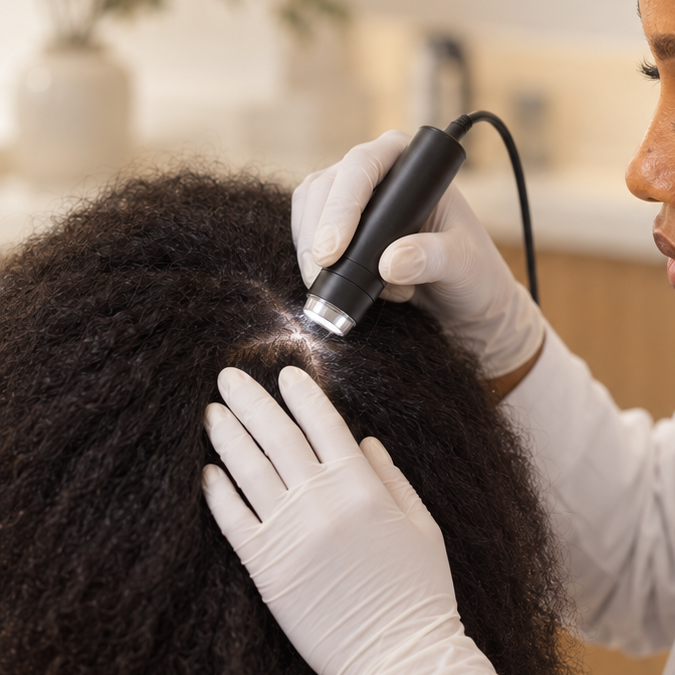
scalp concerns
scalp disorders & hair loss
Changes in the scalp or hair can be difficult to interpret. Persistent itching, scaling, inflammation, shedding, or a reduction in hair density may have several possible causes, and similar symptoms can occur across different conditions.
a closer look
understanding what your scalp is telling you
A detailed trichological assessment allows us to look beneath the surface, understand the underlying cause, and guide you towards the most appropriate treatment plan.
conditions we assess
Folliculitis is inflammation of the hair follicles and may appear as small spots, pustules, crusting, soreness or itching on the scalp. It can have several possible causes, including bacterial or fungal involvement, irritation and other inflammatory processes. Careful examination is important because appropriate management depends on identifying the likely cause. Medical treatment or referral may be required in some cases.
Scalp scaling can present as fine, loose flakes or thicker, more adherent scale. It may be accompanied by itching, redness, oiliness, dryness, or discomfort, and can arise from a number of different scalp disorders. Rather than treating all flaking as ordinary dandruff, a trichology consultation examines the character and distribution of the scale to help identify what may be causing it.
Pruritus is the clinical term for itching. Persistent scalp itching is a symptom rather than a diagnosis and can be associated with irritation, inflammation, allergy, infection, or an underlying scalp disorder. A thorough consultation considers when the itching began, where it occurs, accompanying scalp changes, and possible triggers to help establish the likely explanation.
Contact dermatitis occurs when the skin becomes inflamed following exposure to an irritant or a substance that triggers an allergic reaction. Symptoms may include itching, burning, redness, tenderness, flaking, or swelling. Identifying and avoiding the suspected trigger is an important part of management, while significant reactions may require medical attention.
Alopecia areata is an autoimmune condition in which the immune system targets the hair follicles, commonly causing one or more distinct patches of non-scarring hair loss. It can affect the scalp, beard, eyebrows, or other areas of the body, and its progression differs from person to person. A trichological examination can help identify features consistent with alopecia areata and determine whether dermatological assessment or medical treatment is needed.
Androgenetic alopecia, also known as female or male pattern hair loss, is a progressive condition influenced by genetics and hormones. Early assessment is valuable because identifying the condition and discussing suitable management options may help protect the hair that remains.
Scarring alopecia refers to a group of inflammatory disorders in which damage to the hair follicle can result in permanent hair loss. Possible signs include smooth areas of hair loss, inflammation, scaling, pustules, tenderness, burning, or itching, although presentations can vary. Prompt recognition is particularly important. If scarring alopecia is suspected, referral to a GP or dermatologist may be recommended for further investigation and medical management.
Diffuse shedding describes increased hair loss occurring across the scalp rather than within one clearly defined area. It may become noticeable as more hair in the shower or brush, a smaller ponytail, or an overall reduction in density. Because diffuse shedding can have several potential causes, assessment is key to establishing its cause.
Telogen effluvium is a common cause of diffuse shedding that occurs when a greater proportion of hairs than usual move into the resting and shedding stage of the hair-growth cycle. It may follow illness, surgery, significant stress, hormonal change, nutritional deficiency, weight loss, or certain medications. The shedding may begin several months after the triggering event, which is why a detailed history is essential when investigating the cause.